Act I / Port Meridian Switchboard
Build. Disrupt. Repair.
Form an executive, face a policy defeat and apply a separate confidence or censure rule. Compare the same crisis under three systems and track which offices survive.
Comparative Politics / Play the institutions
Same political crisis.
Three sets of rules.
Who stays in office?
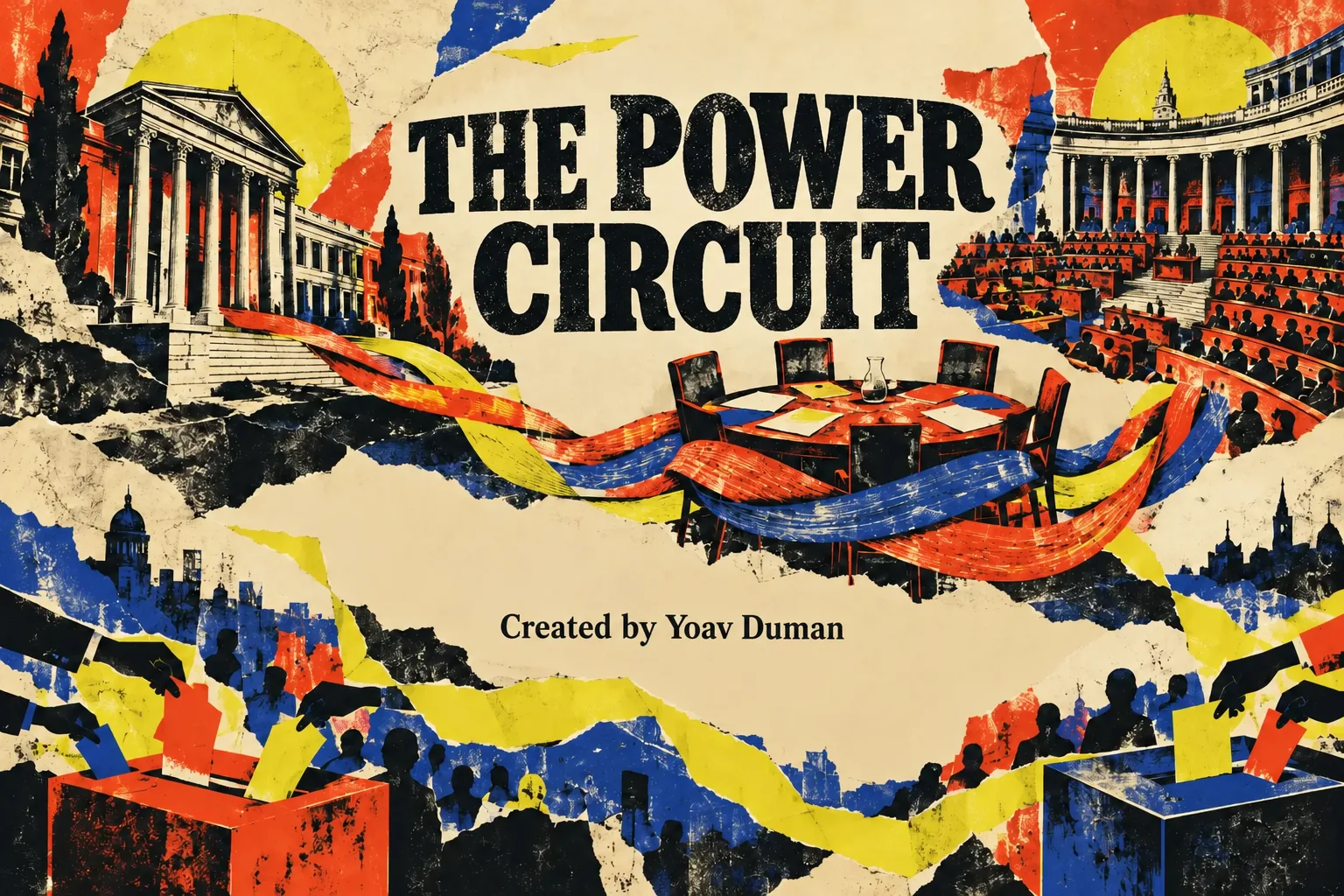
Same election. Same crisis. Three sets of rules. Build, disrupt and repair governments under parliamentary, presidential and semi-presidential systems. Compare real-country variations, weigh institutional tradeoffs, and turn a pattern into a testable research hypothesis.
Created by Yoav Duman · Solo or small-team play
Act I / Port Meridian Switchboard
Form an executive, face a policy defeat and apply a separate confidence or censure rule. Compare the same crisis under three systems and track which offices survive.
Act II / Country Dossiers
Investigate all nine countries through eighteen constitutional decisions. Trace the office, procedure and consequence in each paired case, then connect the evidence across countries.
Act III / Midnight Lab & Research
Try the optional bargaining lab and its strategy challenges. Weigh institutional tradeoffs, then propose a hypothesis, comparative test, rival explanation and possible falsifier.
The constitutional trouble desk is open.
Your work saves in this browser. Download a progress backup to move it to another device. Print or save a PDF record for your class; exporting does not submit your work.
For students
Start with the rules in front of you. Keep your predictions and explanations, revise what you learn, and leave with a readable record.
Use Class mode when your instructor asks for a named record. Use Learning mode to explore and practice.
For instructors
Learning goals, class pacing, answer explanations, country sources and a debrief connecting institutional rules, political tradeoffs and research design.
The complete expedition is the default, with all nine countries and eighteen decisions. Plan separate sessions for the Switchboard, Country Dossiers, and final synthesis/research. The Midnight bargaining lab and its three strategy stamps are optional. Save & Pause preserves drafts and progress; timing needs a classroom pilot.
Six brief entry dispatches come before teaching. Six unfamiliar exit explanations follow the completed final investigation. First explanations, confidence, self-reported help and reasoning revisions are retained. Open responses need human assessment; points and stamps are practice records.
Students explain executive selection and survival, distinguish policy defeat from no confidence and exceptional removal, and examine coalitions and cohabitation. Tradeoff dilemmas ask them to weigh competing priorities under stated conditions. The research ending asks what evidence could support or challenge their explanation.
Instructor tools in the game use access code 6717. The guide identifies model simplifications and country-specific variations. Assess students’ causal explanations, use of comparative evidence, predictions and revisions.
Engineering test report · Reviews use simulated AI perspectives; learning gains need a human pilot.
The teaching pack includes the offline game, artwork, three PDF guides and worksheets, source references, blind-review reports, engineering checks and editable source.
Download teaching pack · ZIPThe fictional rulebooks isolate institutional relationships. Real countries vary within each family. A system label alone does not tell you how democratic, representative or effective a government is.