For students
A short guide, the sources, and a printable writing companion.

Israel–Palestine, explored through interactive cases.
Who can claim what the collective builds?
Build the rules of a fictional cooperative in Palestine, 1905–1948. Use Shafir and Peled’s Being Israeli to investigate how work, national belonging, donor finance, and institutional authority shape who gains access and who is left out.
Work / Membership / Authority
Choose a hiring rule. Read a land lease. Decide who has a claim to care and who can challenge a board. Then follow the institutions into a market test, an unequal political setting, and the upheaval of 1948.
The fictional people make the stakes concrete. The evidence gives you grounds to test an explanation. Later decisions inherit earlier rules, so an inclusive intention still needs resources, organization, and enforceable authority.


All three character quotes stay visible. Key words have definitions by hover, focus, or tap. A writing reference panel keeps the chosen rule and relevant source cards within reach; it opens inline on phones. Explanation checks retain the first response and give feedback before writing. A wrong response can proceed after review.
There is no historical victory score. Explain a mechanism, use evidence, and identify what your cooperative cannot change.
Scholarship / Historical sources / Constructed choices
Gershon Shafir and Yoav Peled, Being Israeli: The Dynamics of Multiple Citizenship (Cambridge University Press, 2002).
Examine national belonging, recognized contribution, and individual rights as different grounds for claims. Test how they connect to finance, organizational power, access, and unequal standing.
Read the 23 source cards, locators, references, and glossary →The cooperative, composite speakers, policy alternatives, numerical costs, and local outcomes are teaching constructions. Source cards identify the historical evidence. The reserve represents finite political and financial capacity; its prices are not measured historical budgets.
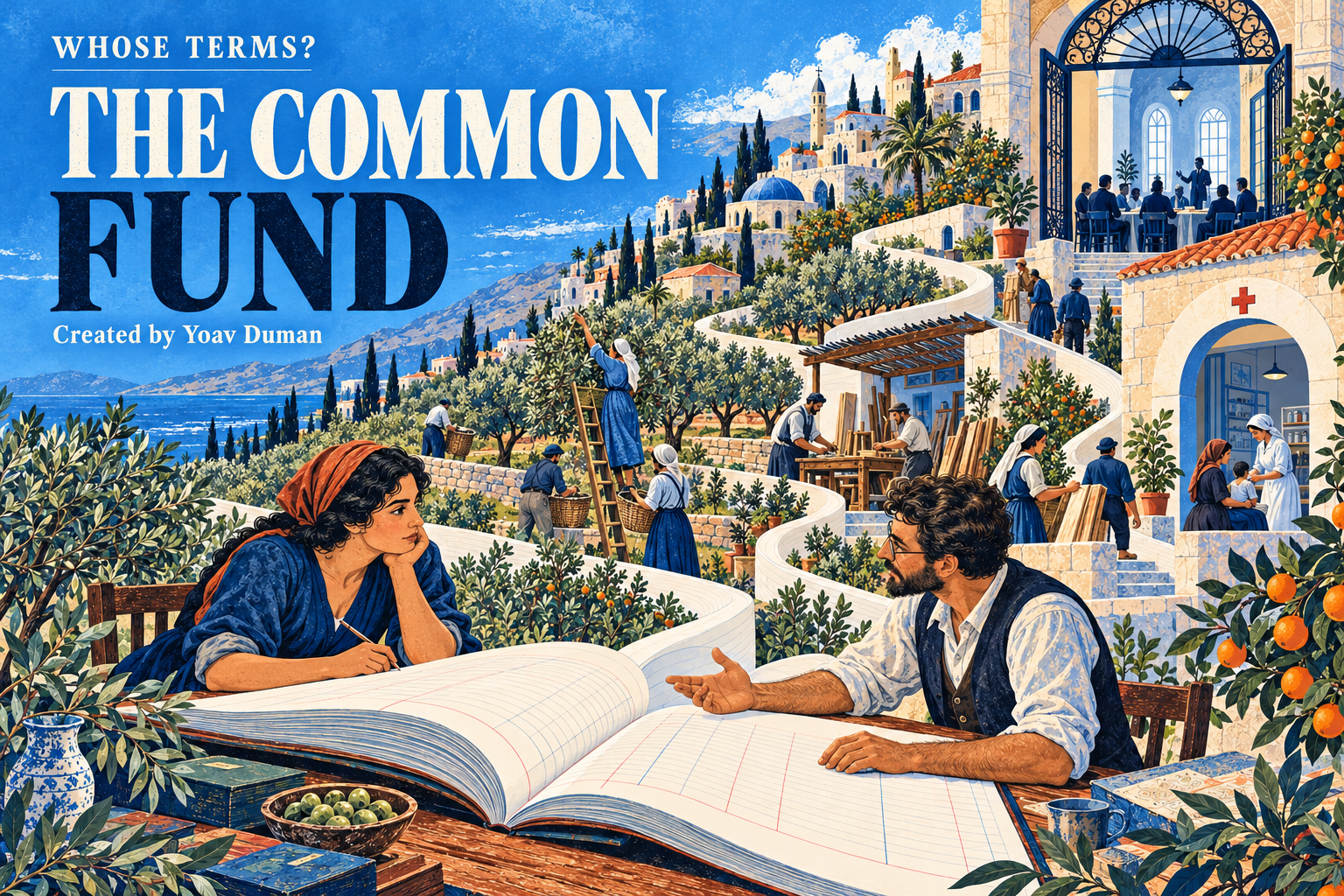
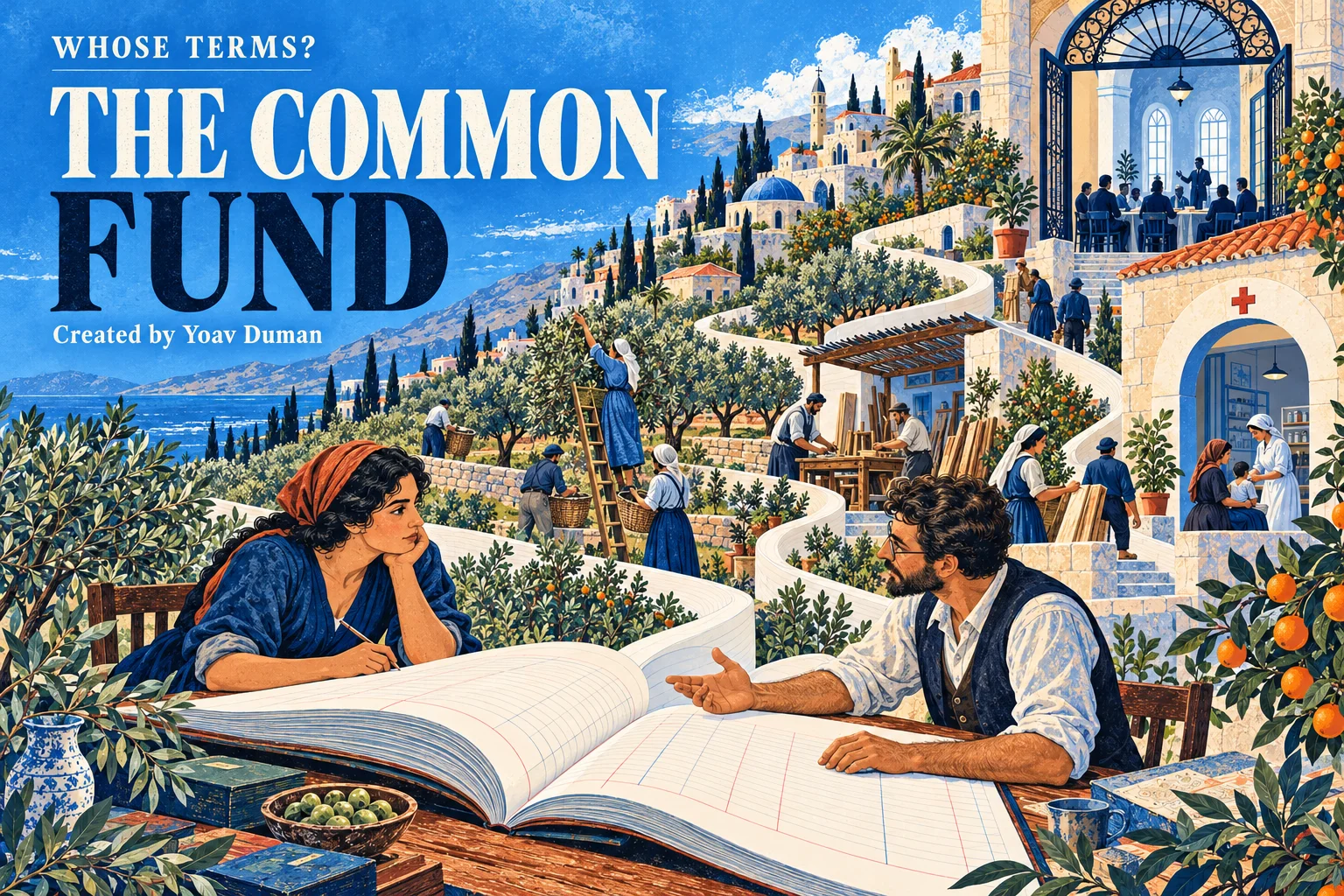
A local reform cannot repeal an external land restriction or determine sovereignty. The cooperative cannot cause or prevent the Nakba, authorize refugee return, or implement every property remedy. Preserving a claim differs from enforcing it. The cover and in-game illustrations are contemporary conceptual artwork.
Self contained / Ready for class
Choose Core for nine decisions in about 60 minutes, Full for eleven in about 90, or Seminar for an additional comparison in about 105. Timings are estimates. Class settings control required writing, evidence, checks, reflections, and final work; discussion and exploration presets are available.
New written-assignment attempts request a resumable JSON checkpoint after five decisions, during the existing reflection pause. Instructors can make that step optional. Use JSON export and import when changing devices or moving between the website and downloaded game; browser saves stay with the current browser and address.
Students export a readable PDF, HTML, or text record and submit through the course. The default report highlights Market Test and Inheritance for manual review, with other decisions grouped as formative checkpoints and a word-minimum completion table. Final analysis and transfer remain separate. Nothing submits automatically.
A short guide, the sources, and a printable writing companion.
Facilitation, assessment, editable guides, and assignment copy.
The whole release with the branded cover and website artwork.