← Class Work
Israel–Palestine, explored through interactive cases.
See how
power works.
Explore how rules, institutions, and choices shape lives in Israel–Palestine. Follow a focused case. Examine the evidence. Build an explanation you can support.
Simulations & learning tools · Created by Yoav Duman
Open now / Institutions and unequal access
The Common Fund
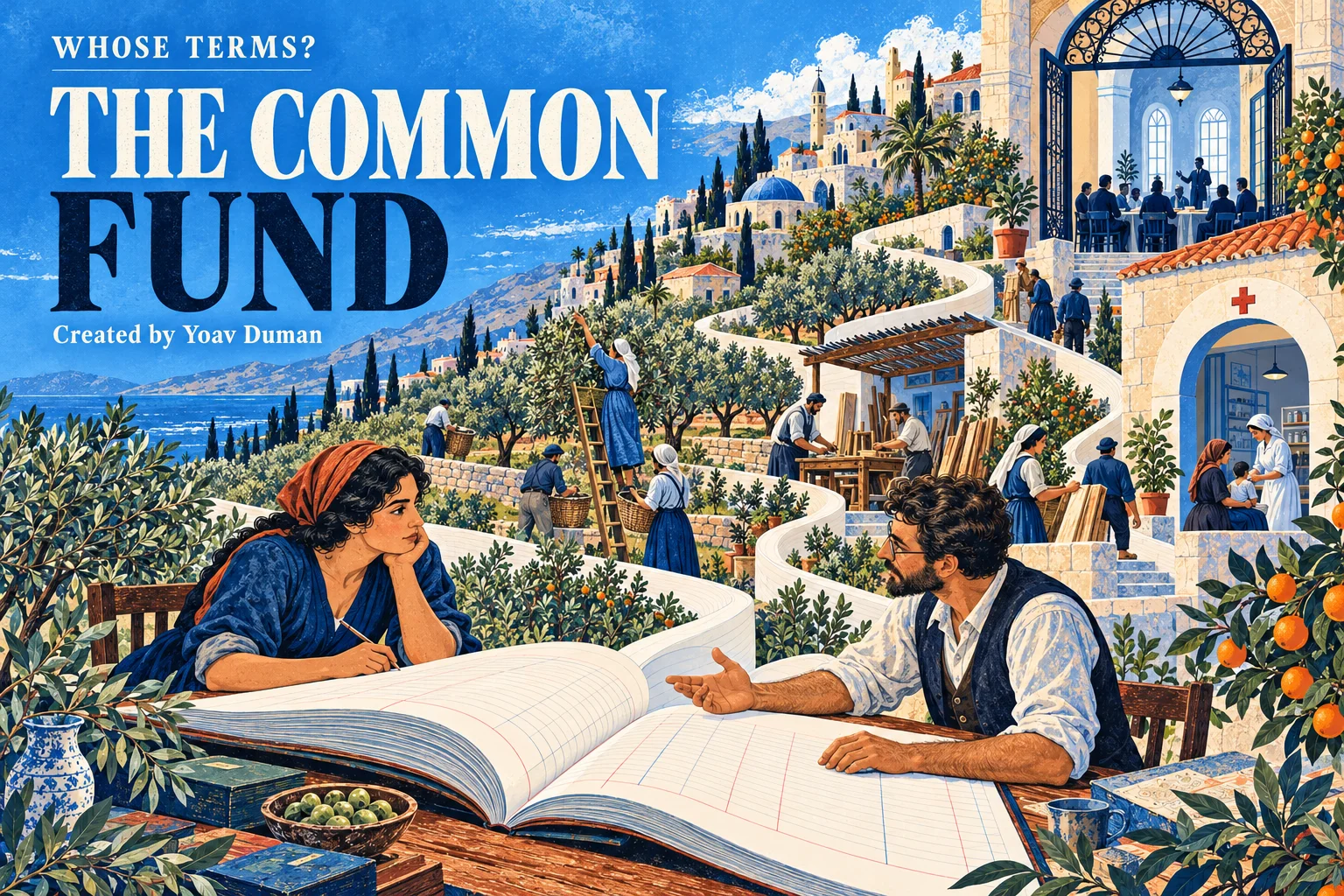
Who can claim what the collective builds?
Created by Yoav Duman
Core about 60 minutes · Full about 90 minutes
Build the rules of a fictional cooperative in Palestine, 1905–1948. Use Shafir and Peled’s Being Israeli to investigate how work, national belonging, donor finance, and institutional authority shape who gains access and who is left out.
9 or 11 decisions. Historical evidence, configurable writing, save and return, and a complete classroom packet.
Explore the case ↗Open now / Representation & political power
A Seat, With Conditions
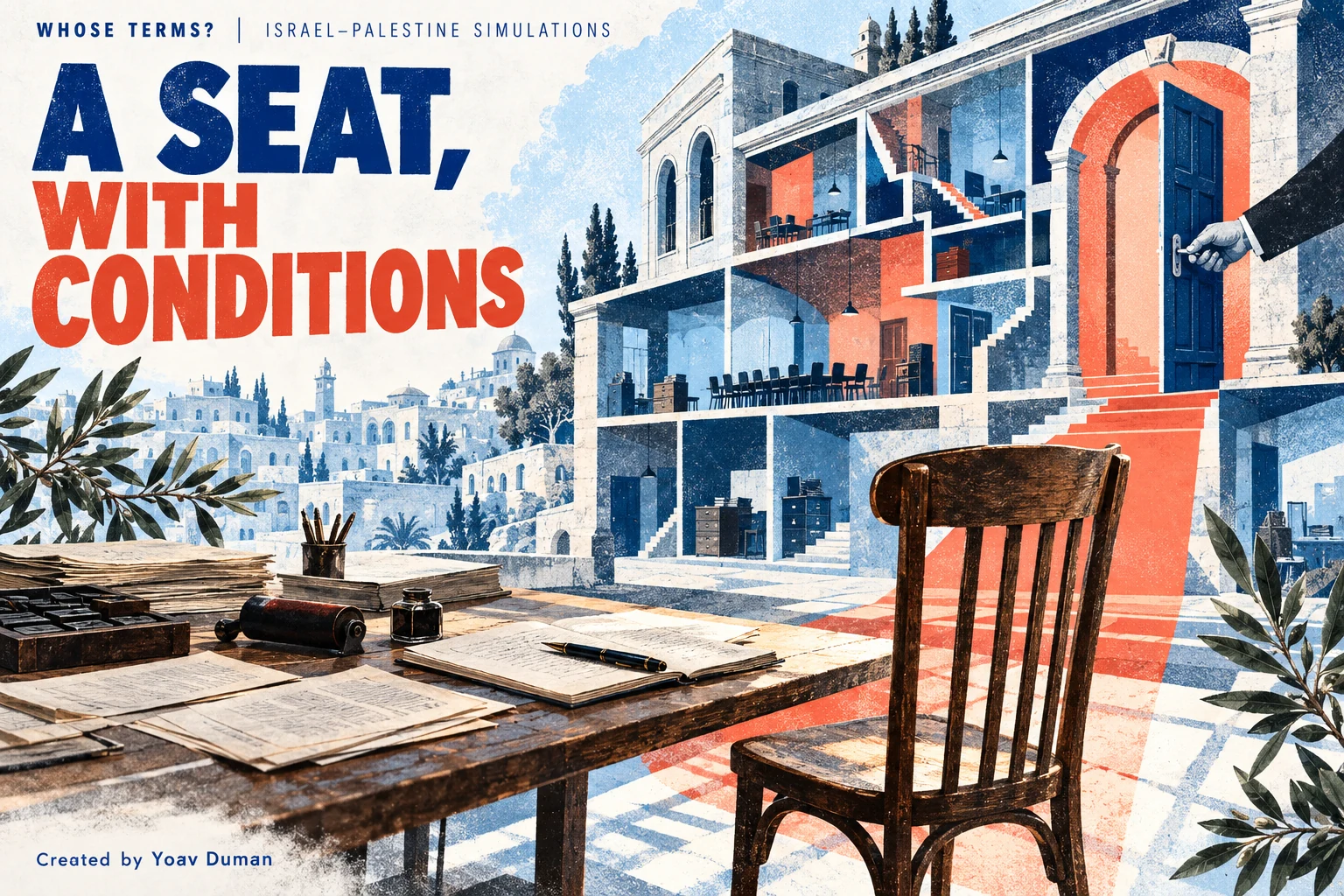
Who sets the terms?
Created by Yoav Duman
Estimated 90–120 minutes · Pause after encounter 9
Advise a fictional Palestinian civic committee. Build public work, seek representation, and inspect the powers that remain outside the room.
Through Rashid Khalidi’s The Iron Cage. 18 encounters, two after-outcome reflections, and a complete classroom packet.
Explore the case ↗Open now / Citizenship & belonging
A Right on Paper
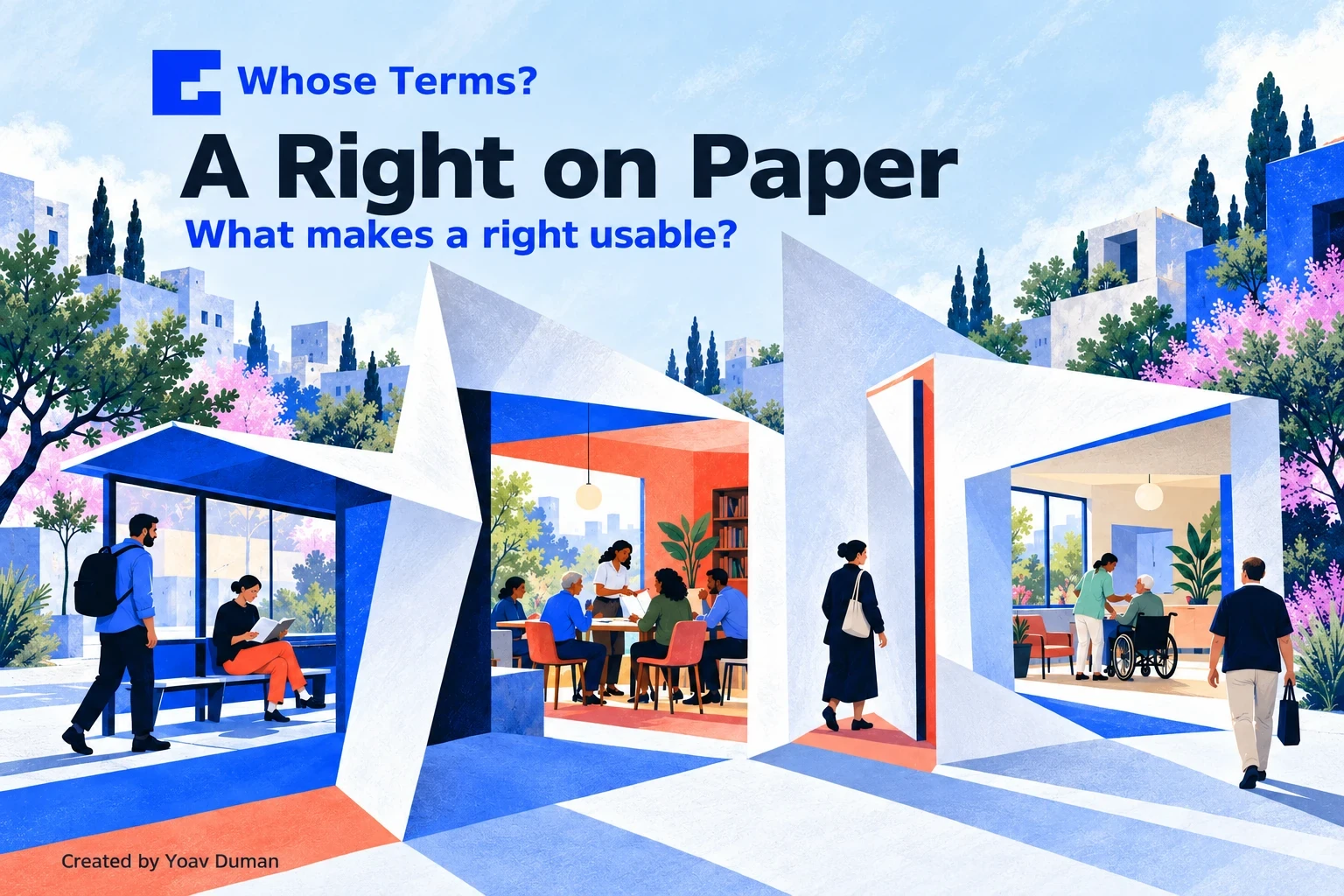
What makes a right usable?
Created by Yoav Duman
Estimated 90–120 minutes · Solo or pairs
A job offer. A benefit. A household. A court order. Work through the people and institutions that connect a claim to an outcome.
Based on Gershon Shafir and Yoav Peled’s Being Israeli. A self-contained browser simulation for introductory students and curious readers.
Explore the case ↗Follow the author.
Keep your judgment.
Each case connects scholarly ideas to a question you can investigate. Learn the explanation, use evidence, consider an alternative, and identify what remains uncertain. The case supplies the context needed to begin.
Whose Terms? is a collection of Israel–Palestine simulations and learning tools. These simulations run in your browser. Sources, creator credit, and constructed material are identified within the case.
Teach with this case →