01 / Propose
Write the charter.
Set rules for membership, public purposes, and authority. Trace who can make decisions and who can change the rules.
Political Theory / Aristotle’s Politics
The council has fallen.
Who makes the city?
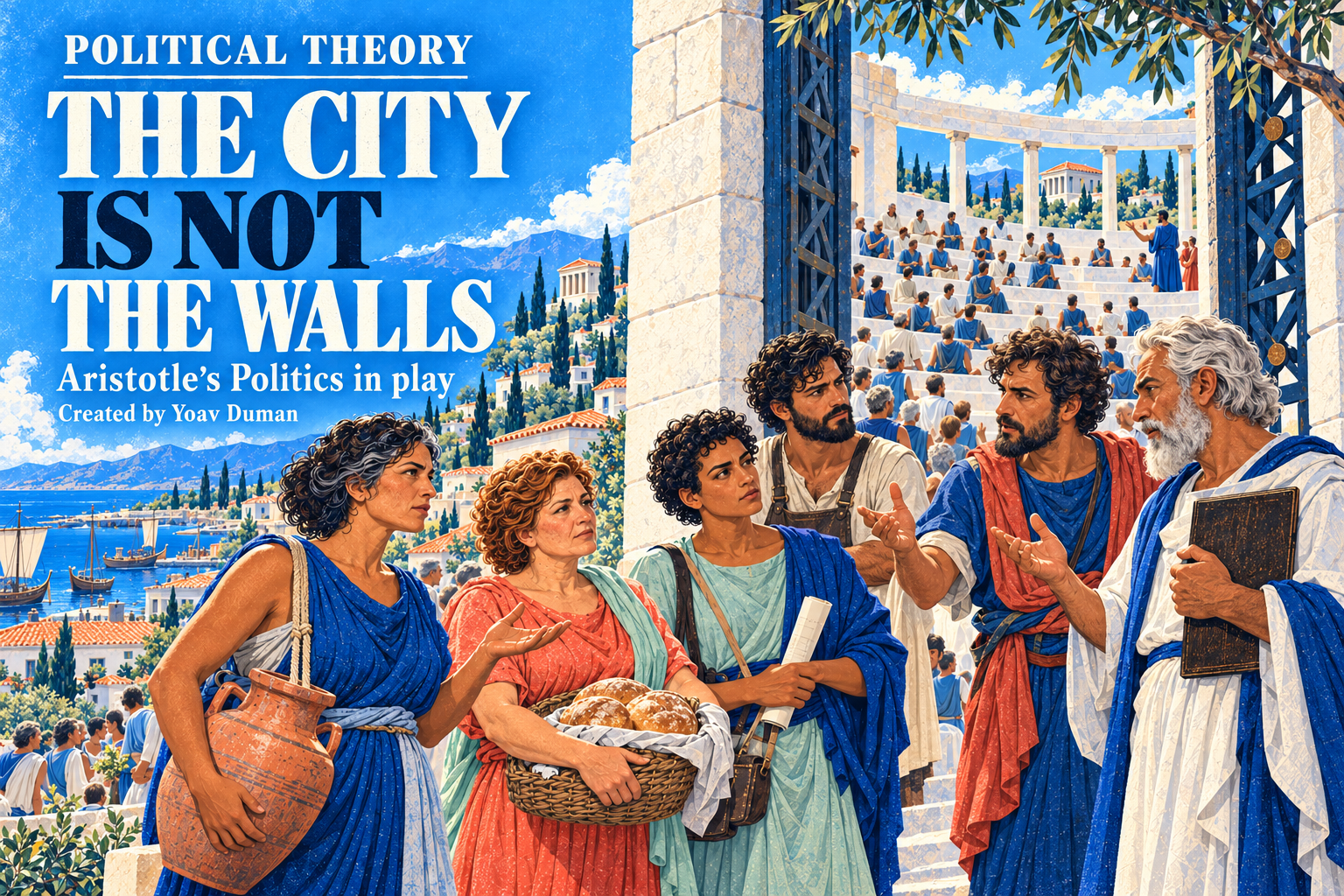
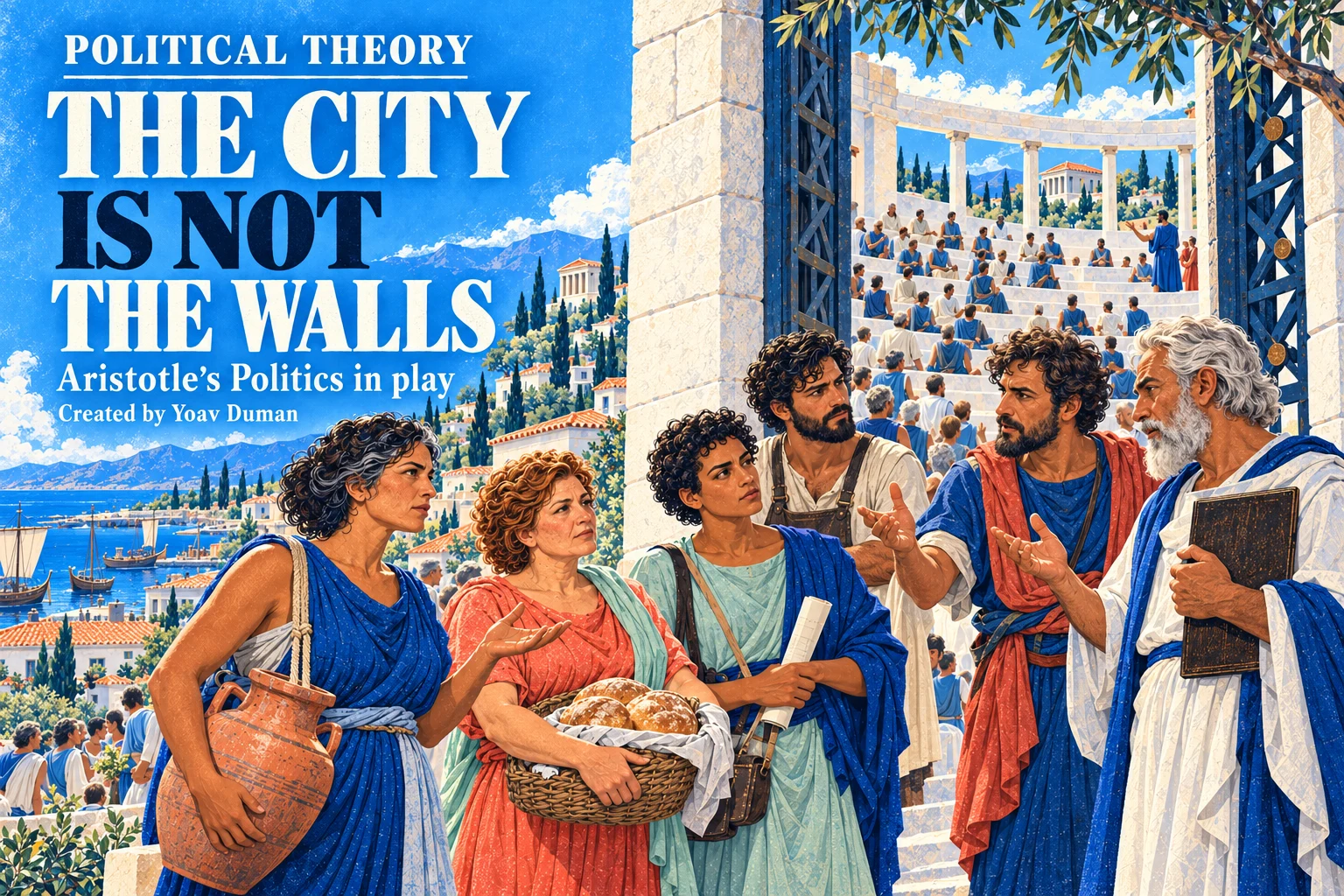
The council has fallen. The walls are still standing. So who makes the city? Write a charter for Kallia, hear six residents challenge it, and work through Aristotle’s arguments about citizenship, justice, virtue, and rule. Decide who belongs, trace who holds power, and defend your reasons against an objection. The ideas arrive as you need them; no prior Aristotle reading is required.
Created by Yoav Duman · An illustrated introduction to Aristotle
01 / Propose
Set rules for membership, public purposes, and authority. Trace who can make decisions and who can change the rules.
02 / Examine
Six residents put your reasons under pressure. Use Aristotle to distinguish citizenship, useful work, justice, and virtue.
03 / Defend
Explain the argument in your own words, test a premise against the case, and decide what to retain or revise.
The activity teaches the concepts as you go. Your instructor assesses the written arguments. Two brief factual detours offer another example when a distinction needs attention. Work saves in this browser; download a backup before a break. Exporting a report does not submit it to your course.
For students
Getting started, the six rounds, key vocabulary, reconsidering an answer, and saving and submitting your final PDF.
No prior reading required. Bring one question to class.
For instructors
Learning goals, round timing, suggested course instructions, assessment criteria, theoretical distinctions, debrief prompts, and primary texts.
About 70 minutes is a design estimate; allow extra time and a pause. Students write 11 short reasons and five extended arguments. Completion checks record required work. Assess reconstruction, accurate distinctions, case application, and a serious objection. Students can reject Aristotle while demonstrating strong understanding.
The teaching pack includes the complete offline HTML, both guides in PDF and Word, online guide copies, and course instructions.
Teaching pack · ZIP