POLITICS. TEACHING. OTHER QUESTIONABLE INTERESTS.

Teaching / Open the question

CLASS
WORK.

The world is complicated.
The worksheet should know that.

Simulations, visual arguments, syllabi, and things to try in a room full of people. Built to make ideas do some work.

Use something. Tell me what happened.

5 resources

Citizenship

Membership, rights, identity, and who gets to count as part of the public.

Clear filters
01
Whose Terms?

Simulation / Core ~60 min · Full ~90 min · Save & return

The Common Fund

Build the rules of a fictional cooperative in Palestine, 1905–1948. Use Shafir and Peled’s Being Israeli to investigate how work, national belonging, donor finance, and institutional authority shape who gains access and who is left out.

Created by Yoav Duman

Explore simulation
02
Whose Terms?

Simulation / Estimated 90–120 min · Save & return

A Right on Paper

Follow people trying to reach a job, claim service benefits, live together, and return home under a court order. Use Shafir and Peled’s Being Israeli to explore who qualifies, who decides, and how rights become usable.

Created by Yoav Duman

Explore simulation
03

Simulation / 45–60 minutes · optional +10

Reply Across

Your advice arrives before hindsight. Two envelopes take you to Canada in 1992 and India in 1956, when the next arrangement was still contested. In Reply Across, recommend a proposal, preserve what you expect, answer an objection and later reopen your prediction beside the historical record. Compare federal powers, internal minorities and the categories used to count people—then decide which parts of your explanation can travel. A narrative simulation for students with a basic introduction to nationalism. About 45–60 minutes, with an optional ten-minute Spain postscript comparing Catalonia and the Basque Country. Save and print your addressed reply. Created by Yoav Duman.

Explore simulation
04

Simulation / 45–60 minutes · optional +10

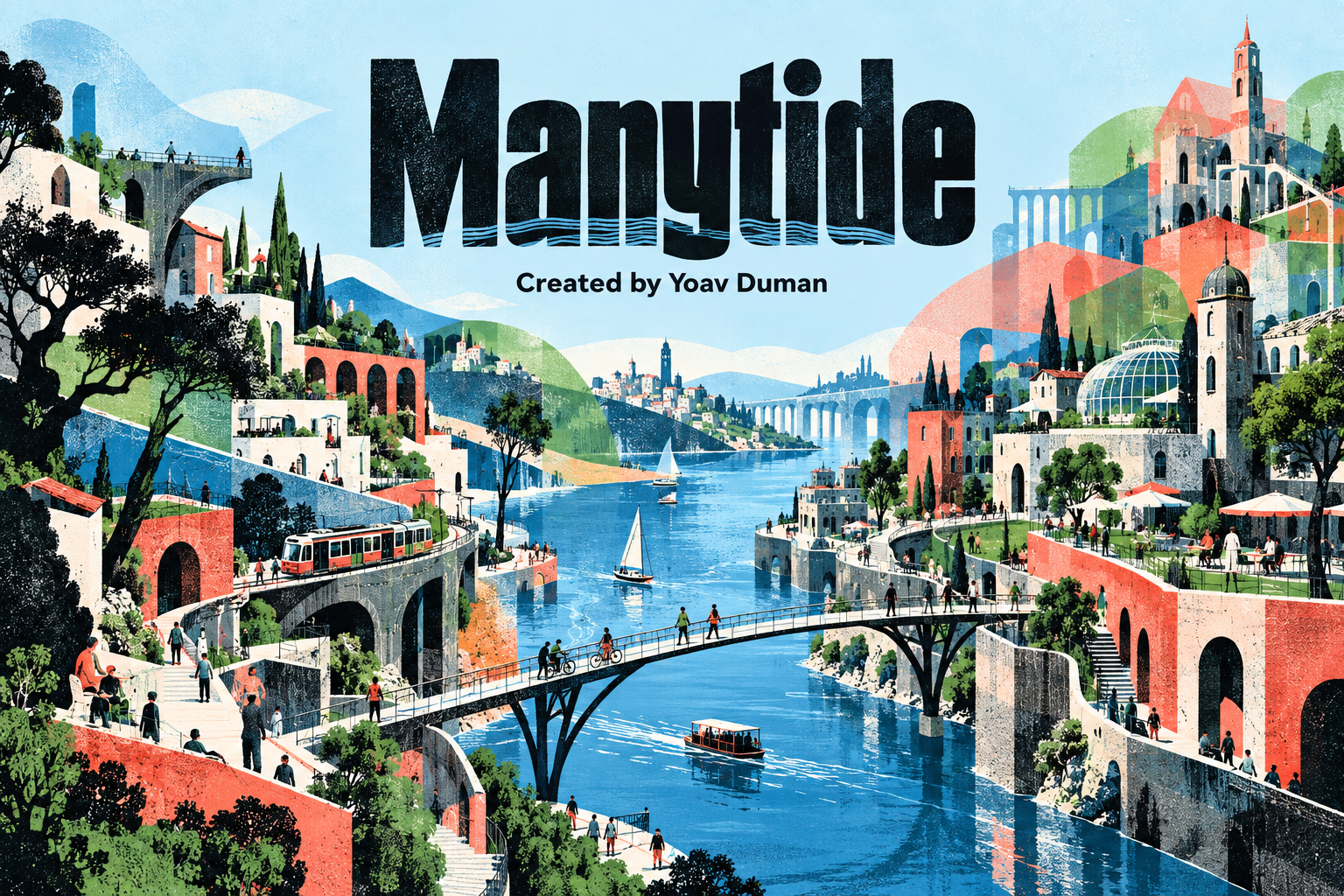
Manytide

A household has three destinations. A train arrives after the shift begins. A jurisdiction line does not tell you who needs a service. In Manytide, you follow a public-systems mission through five stops in a fictional country, making choices about records, work, rivers, authority and money. Read the evidence, predict what your arrangement will change, then return to the people and obligations it leaves behind. Explore nationalism, federalism and belonging through a story that gives your explanations something to answer for. About 45–60 minutes, with an optional ten-minute coastal detour. No prior theory knowledge needed. Save, revisit and print your field journal. Created by Yoav Duman.

Explore simulation
05

Simulation / About 55 minutes of active work

A Door That Says Open

A Door That Says Open is a single-player democracy investigation in Novara. Follow a worker trying to vote, an opposition volunteer trying to reach voters, and residents questioning power after an election. At a public hearing, test a hypothesis against records and ask for a timely response; then replay one changed rule. Apply the reasoning to Belora, a real comparative case, and a flood-plan hearing in Teren. Your explanations, revisions, and evidence appear in a printable report. Created by Yoav Duman.

Explore simulation

MUSE / AI & education

BETTER QUESTIONS.
BETTER CONVERSATIONS.

A little help getting from “I read it” to “I understand it.”

These learning bots help students read difficult texts, apply concepts, test arguments, and revise their thinking. Start with the source. Keep your judgment switched on.

Who Gets to be We

The Cooperation Lab — Multilateralism Partner

The Rivalry Brief

The Democracy Repair Shop

THE RULES HEARING

The Signal Room: January 6, Testimony & Power 40-60 minutes

Before You Begin Watch these three testimony videos before starting The Signal Room: 1. Police testimony: Aquilino Gonell, Michael Fanone, Daniel Hodges, and Harry Dunn https://youtu.be/a8WU8MRC2M8 2. Shaye Moss’s testimony, including recorded testimony from Ruby Freeman https://youtu.be/6dn48fcHkFw 3. Cassidy Hutchinson’s testimony https://www.pbs.org/video/the-january-6th-hearings-day-6-9racyj/ As you watch, note a few specific moments: what each witness personally experienced, what they learned from others, and what questions their account raises. Bring those observations to your conversation with Alex. Prefer to read? You can use the hearing transcripts instead: Police testimony: https://www.govinfo.gov/content/pkg/CHRG-117hhrg45472/html/CHRG-117hhrg45472.htm Shaye Moss: https://www.gov

After the Headline: The Nigeria File

Bots open in ChatGPT or Gemini. You may need an account. For classwork, follow your course’s instructions about AI.

For educators

LET THE ROOM
FIND THE PROBLEM.

I also build activities that happen between people.

My workshops start with decisions, bargaining, uncertainty, and competing priorities. Then we use theory to make sense of what just happened.

Talk workshops